MiddleOut Analytics - AI-Powered Ecommerce Platform
Context-aware AI analyst for ecommerce analytics
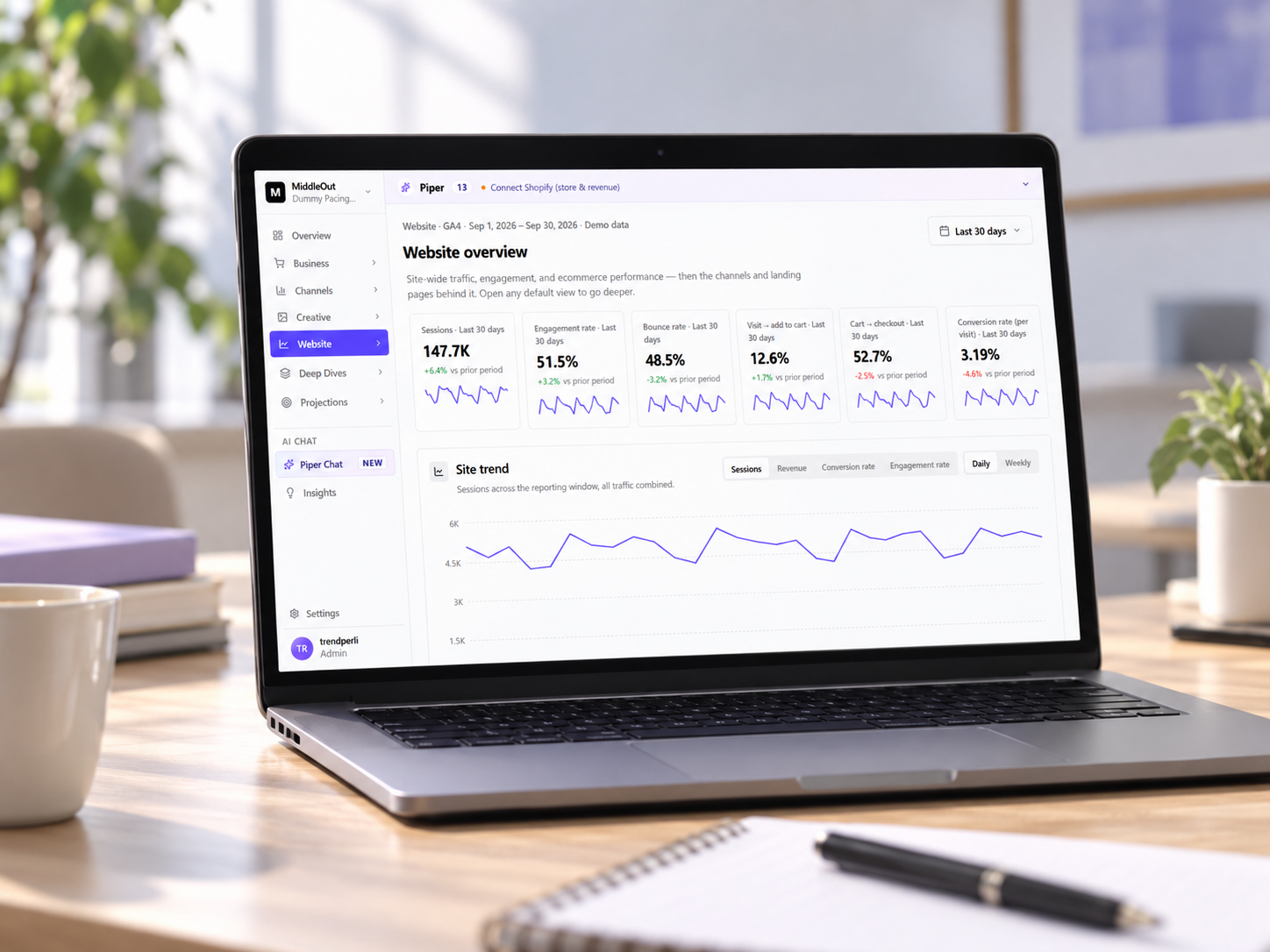
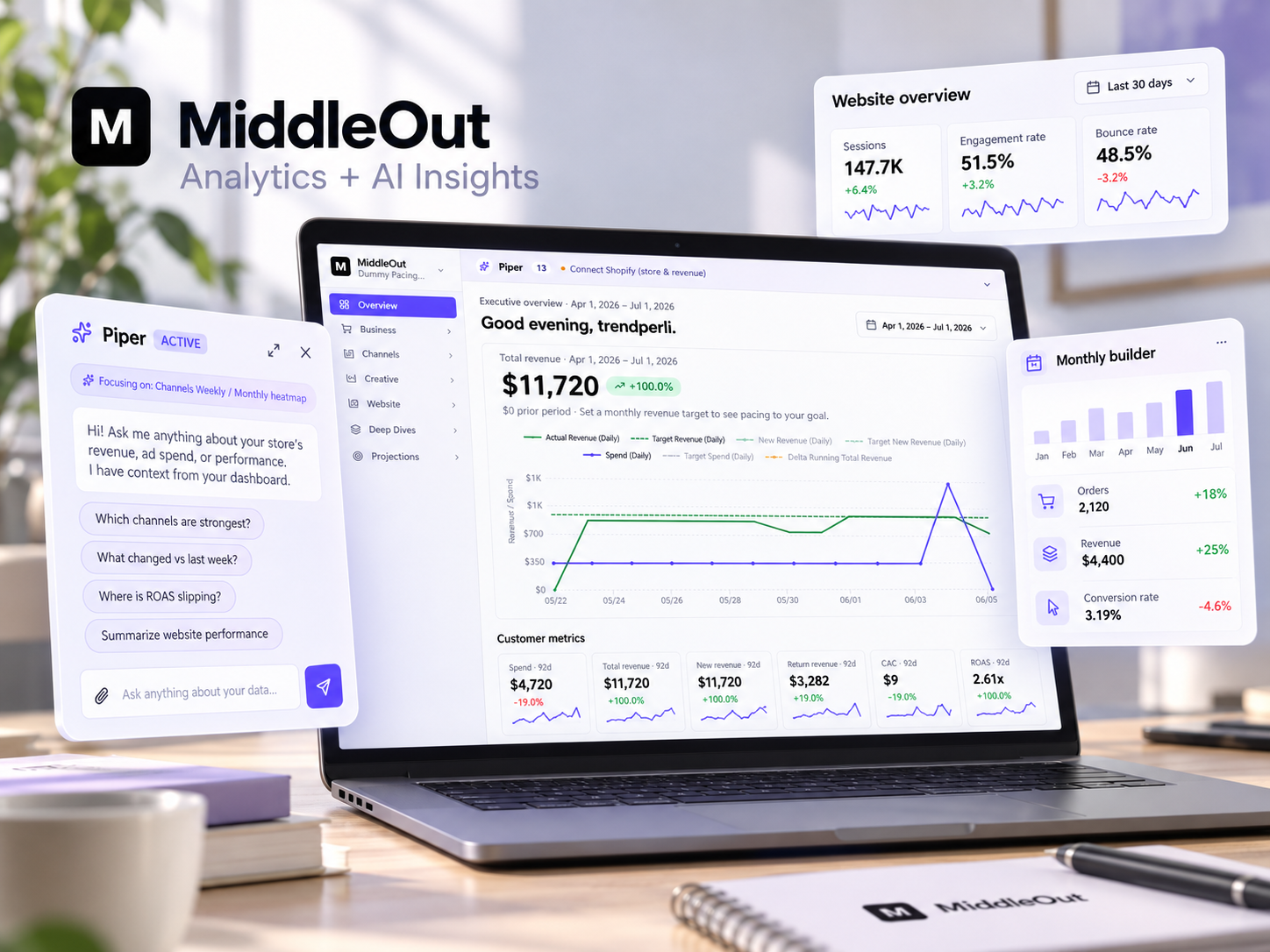
MiddleOut Analytics is a multi-workspace analytics platform for ecommerce brands. I worked as a backend developer on Piper, the AI layer: context-aware chat, OpenAI and Anthropic model orchestration, specialist monitoring agents, and the runtime that routes, budgets, and audits AI work across workspaces.
Project type
Ecommerce analytics platform - AI chat + agentic monitoring layer
Role
Backend developer - AI layer
Year
2026
Scope
Piper AI backend, context-aware chat, chat history, OpenAI and Anthropic integration, tool-calling agent loop, monitoring agents, daily per-workspace scheduling, model fallback, budget checks, audit logging, workspace isolation
Summary
Built for
Ecommerce operators and marketing teams who need dashboard data explained in context, not just displayed as charts. The project was built by the Softify agency, and I was brought in as a backend developer for the AI layer.
The problem
A dashboard can show what happened, but it does not explain why it matters or what to do next. A generic chatbot does not solve that if it cannot see the selected chart, date range, workspace context, saved insights, or data freshness. Once AI runs across multiple workspaces, cost, isolation, fallback, and observability become product requirements rather than implementation details.
Approach
Piper was built as a layered AI system. The conversational layer receives structured chart and KPI context from the dashboard. Behind it, a backend orchestrator routes requests through approved tools and model providers, while scheduled monitoring agents review each workspace and write confirmed findings into an insight feed.
Showcase story
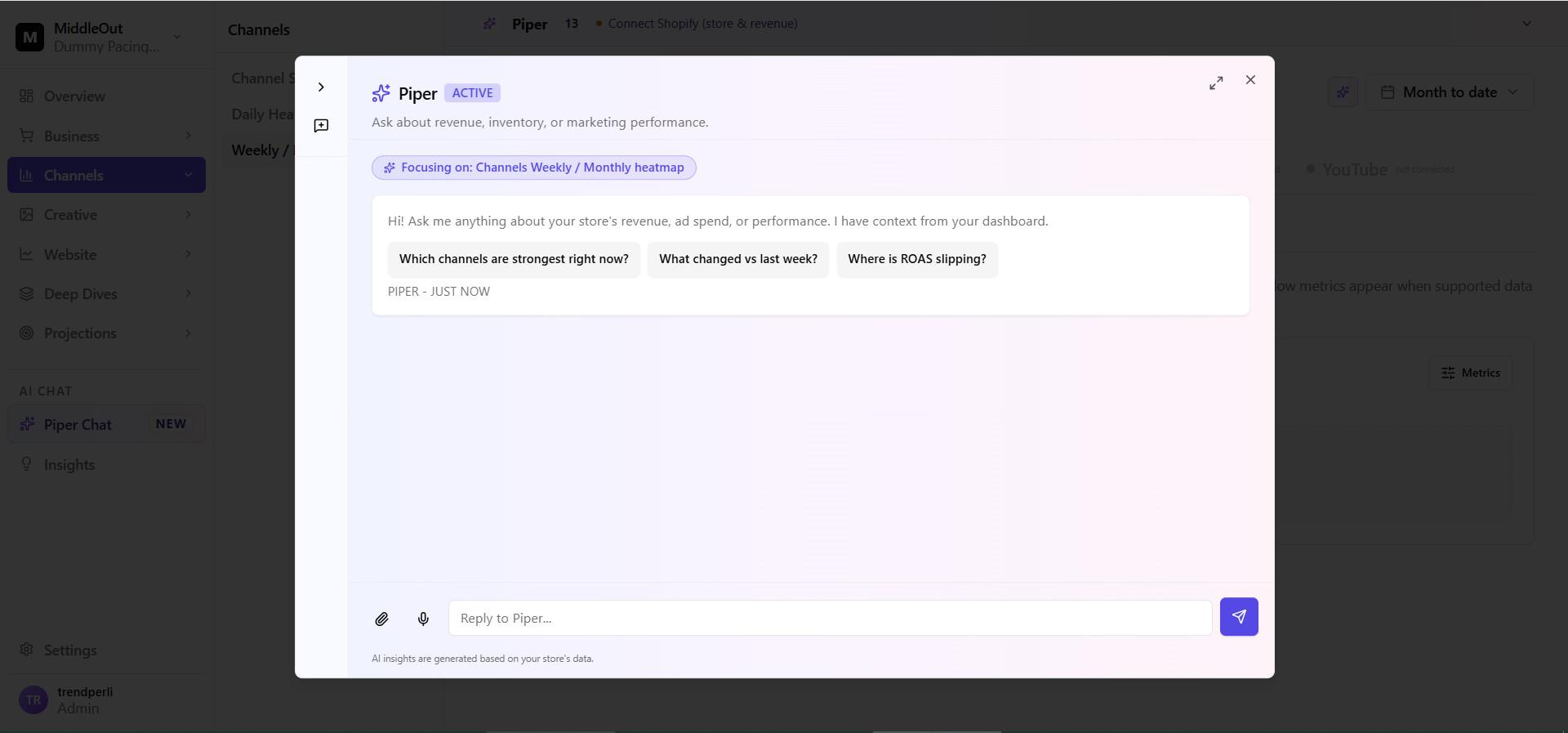
Piper turns "ask about this chart" into a real analyst workflow. A user can open the assistant from a chart or KPI card, and the backend receives the exact component context: metrics, date range, page, workspace, comparison window, and a preview of the data. Piper can then answer with the context of what the user is actually seeing, not a generic prompt floating beside the dashboard. This was an agency collaboration: Softify led the overall MiddleOut product work, and I was invited in as a backend developer focused on the AI layer.
The problem
Most AI dashboard features are a chat box with no real context. That is not enough for an ecommerce analytics product where the same question can mean different things depending on workspace, date range, attribution view, data freshness, and the chart currently on screen. Production AI also needs operational guardrails. Model calls cost money, providers can fail, stale data can create bad alerts, and multi-workspace products cannot rely on prompt instructions for tenant isolation.
What I built
- Context-aware Piper chat backend for chart and KPI entry points
- Persistent chat history with create, open, rename, delete, and generated titles
- Tool-calling agent loop with workspace context supplied by the runtime, not by the model
- Domain-specific prompt paths for business, channels, creative, website, insights, and email-style analysis
- Streaming responses through a shared orchestrator
- Multi-provider model client for Anthropic Claude and OpenAI behind one response shape
- Ordered provider fallback, budget preflight, usage capture, and audit logging
- Specialist monitoring agents for spend anomalies, pacing, revenue drivers, and Shopify-style commerce signals
- Daily per-workspace monitoring with freshness checks, catch-up runs, and delayed retry on provider rate limits
- Insight feed writes with severity, agent attribution, deduplication, dismissal, and "Ask Piper about this" follow-up paths
- Workspace-level usage and cost telemetry for chat, monitoring runs, and agent runs
Design decisions
The core design decision was to keep detection deterministic and use the LLM for explanation. Monitoring agents identify signals with rule-based and statistical checks first, then the model turns confirmed findings into concise insight cards. If a provider fails, the product can fall back to rule-based wording instead of losing the alert entirely. Workspace isolation is handled by backend runtime context. The model does not choose a tenant identifier, and tools only receive the workspace passed by the orchestrator. Each agent also runs with a narrow allowlist of tools, so the model cannot wander into unrelated data access. Monitoring refuses to create findings from stale data. If an integration has not synced for the run date, the job is skipped and picked up by a later catch-up pass instead of producing misleading anomalies.
Under the hood
The app is a Next.js and TypeScript product backed by Supabase for auth, Postgres, row-level security, chat history, insights, and run telemetry. Inngest handles scheduled and fan-out work, with one durable monitoring run per workspace. Anthropic Claude and OpenAI are called through a small multi-provider client that normalizes streaming, tool use, fallback, and response parsing for the rest of the application.
Why it matters
This project signals:
- Building an AI layer for a multi-tenant product, not a single chatbot demo
- Connecting chart-level dashboard context to backend model orchestration
- Treating cost, fallback, retries, auditability, and data isolation as first-class backend features
- Designing monitoring agents where deterministic checks find the signal and the LLM explains it
- Working as an embedded backend developer inside an agency-led client codebase
Final positioning line
The AI layer of a multi-workspace ecommerce analytics platform: context-aware Piper chat, specialist monitoring agents, and a backend orchestration runtime for OpenAI, Anthropic, tool use, budgets, and audit logs.
Under the hood
Piper combines a conversational front end with a scheduled monitoring backend, both routed through one orchestrator. Supabase stores conversations, insights, and run telemetry under row-level security; Inngest fans out durable monitoring runs per workspace; Anthropic Claude and OpenAI sit behind a shared multi-provider client with fallback, streaming, tool use, budget preflight, and audit logs.
Next.js
App Router application and API routes
TypeScript
Typed backend orchestration and model integration
Supabase
Auth, Postgres, RLS, chat history, insights, and run telemetry
Inngest
Per-workspace scheduled monitoring, retries, and catch-up runs
Anthropic Claude
Primary model path for assistant and monitoring responses
OpenAI
Fallback and alternate model provider behind the same response shape
Related work
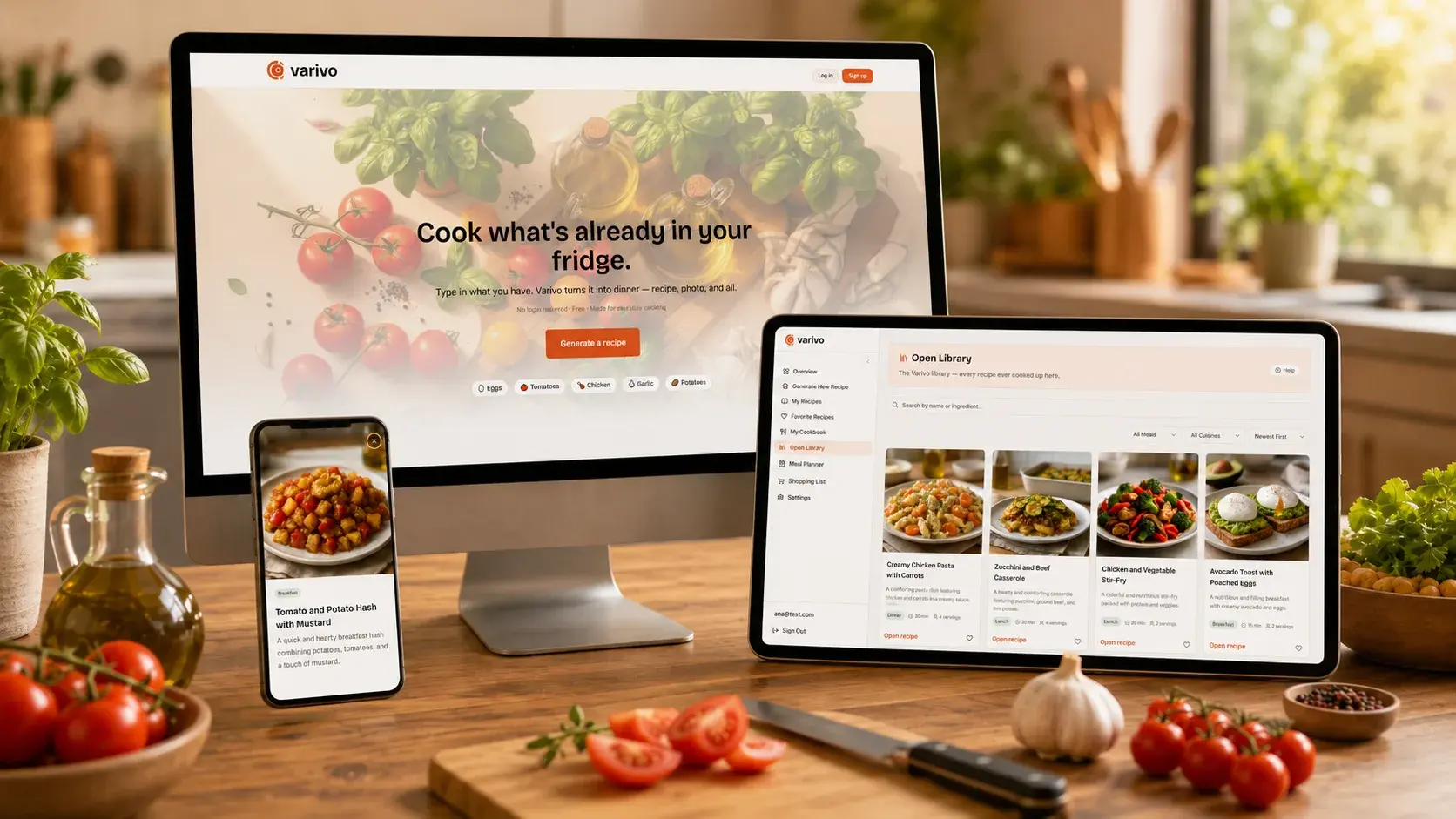
Varivo
AI recipe generator for everyday cooking
Open showcase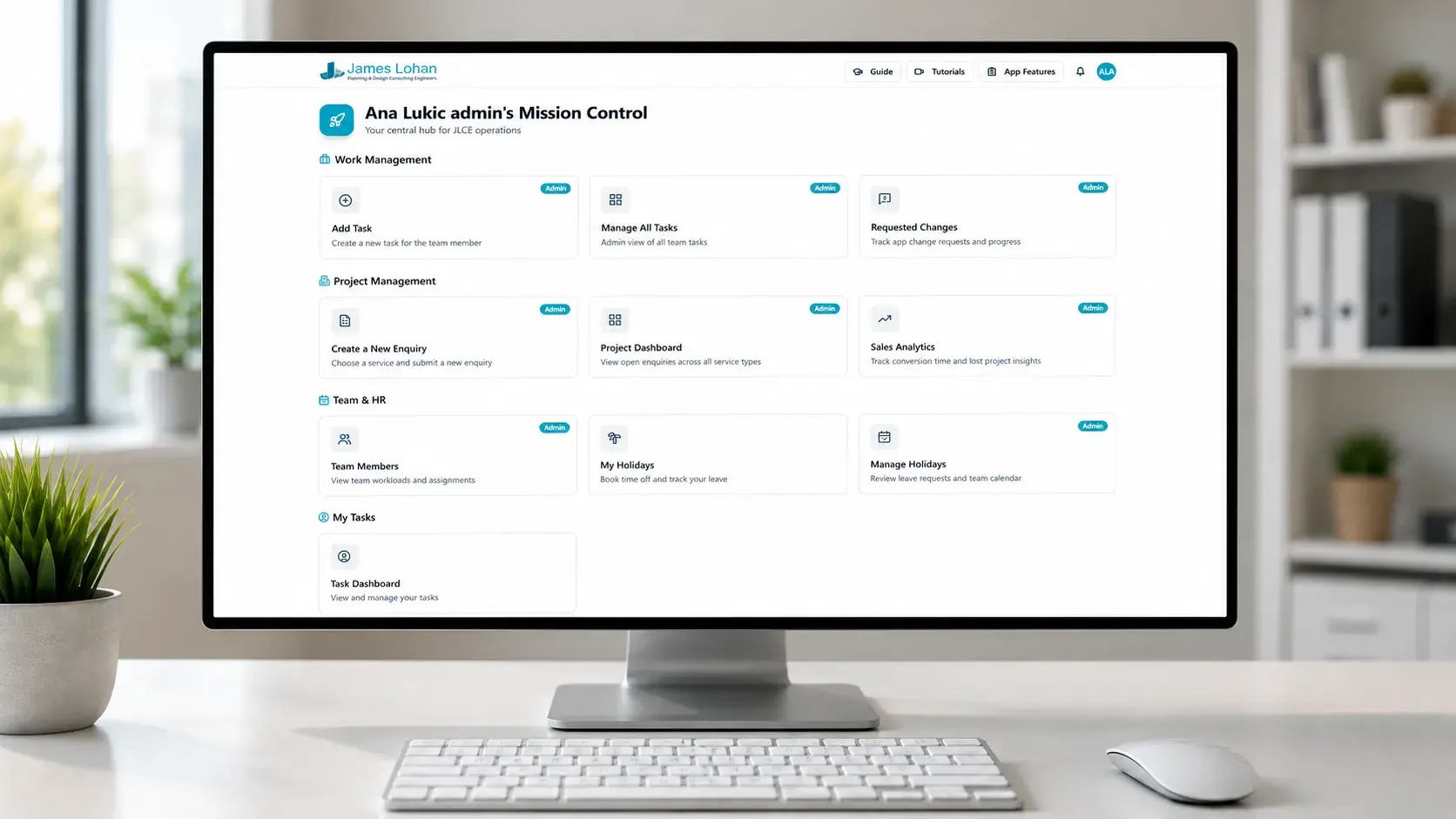
James Lohan Mission Control
Internal operations platform for a multi-service engineering workflow
Open showcase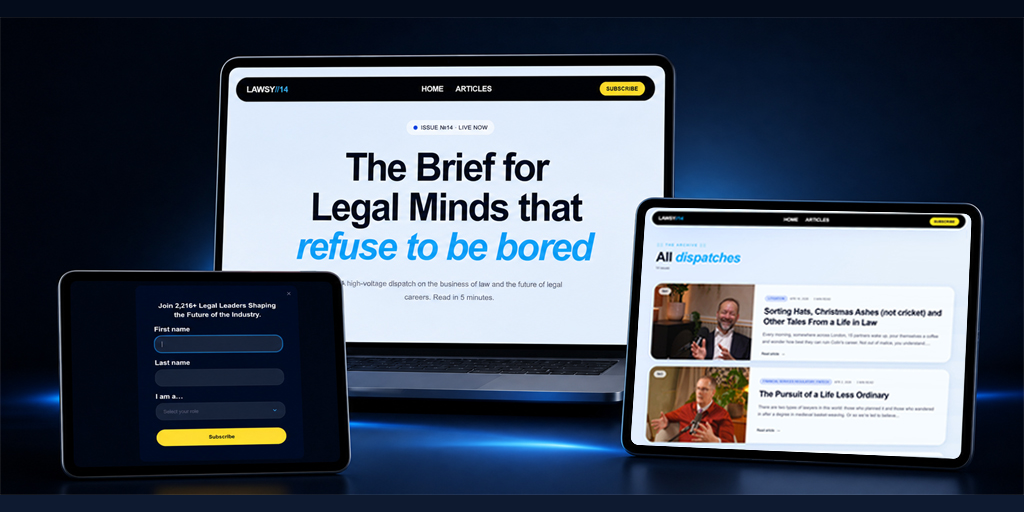
Lawsy
Editorial newsletter platform for modern legal minds
Open showcase
CarPark Locator
Cross-platform parking assistant for drivers
Open showcase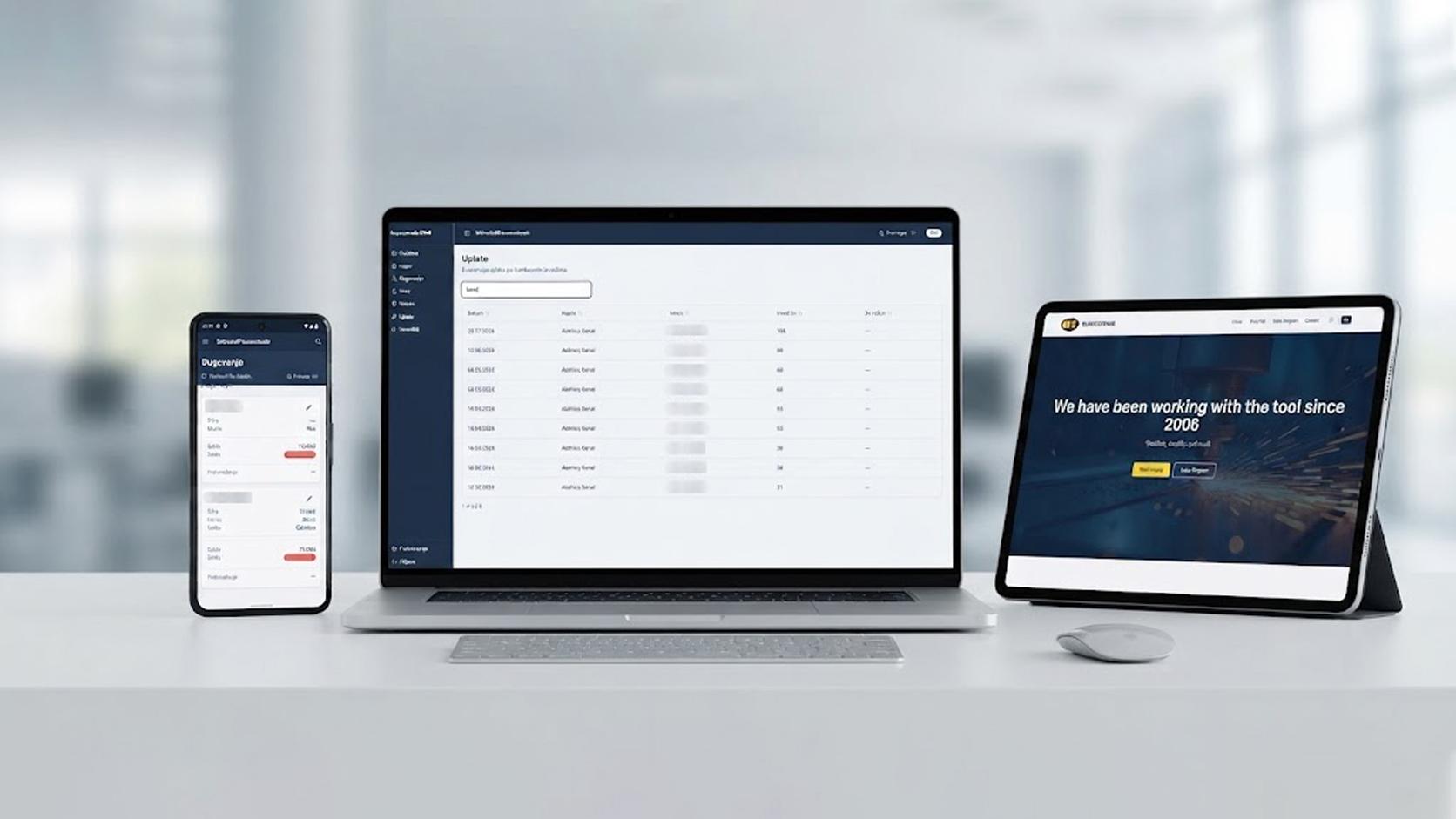
Busscotrade
Public B2B website + private internal CRM for invoices, receivables, inventory, payments, and reporting
Open showcase
Eye Line
Bilingual ophthalmology platform with a public clinic website and an internal scheduling dashboard
Open showcase
Home Budget
AI-powered personal finance dashboard
Open showcase